Best Ghats in Varanasi: A Complete Visitor Guide
Explore the best ghats in Varanasi, from the vibrant ceremonies of Dashashwamedh and Assi to historic riverside palaces and serene boat viewpoints.

When planning a journey to the spiritual heart of India, identifying the best ghats in Varanasi helps you navigate the ancient riverfront with purpose and clarity. Varanasi is home to more than eighty distinct ghats stretching along the crescent bank of the holy River Ganga. Among them, Dashashwamedh Ghat, Assi Ghat, Manikarnika Ghat, and Namo Ghat stand out as the most iconic for their religious heritage, cultural rituals, historical architecture, and scenic boat perspectives. Whether you visit for sunrise prayers or the evening prayer rituals, each stone stairway offers a unique window into the city's living traditions.
Walking the riverfront or cruising along the water lets you see the riverfront come alive. Devotees take morning dips, priests chant ancient Sanskrit hymns, and vendors offer clay cups of spiced chai. Here is your comprehensive guide to the must-visit riverfront spots, what distinguishes each one, and how to best experience them during your stay.
The Best Ghats in Varanasi You Must Visit
While every step along the riverbank carries centuries of folklore and faith, several ghats stand out for their historical importance, photographic beauty, and vibrant daily activities.
1. Dashashwamedh Ghat: The Beating Heart of Kashi
Dashashwamedh Ghat is unquestionably the most famous and central riverfront location in the city. According to Hindu mythology, Lord Brahma created this ghat to welcome Lord Shiva, performing ten horse sacrifices here. Located just steps from the Kashi Vishwanath corridor, it remains bustling at all hours of the day.
In the evening, Dashashwamedh Ghat hosts the world-renowned Ganga Aarti. Priests dressed in synchronized robes swing massive multi-tiered brass oil lamps, blow conch shells, and ring temple bells. Watching this ceremony from the stone steps or from the water is a highlight of any trip. Because of its popularity, this area is consistently lively, colorful, and packed with pilgrims, travelers, and local scholars. Travelers can easily arrange boat rides from Dashashwamedh Ghat to access the wider riverfront conveniently.
2. Assi Ghat: Serenity, Yoga, and Morning Rituals
Situated at the southern end where the ancient Assi river meets the sacred Ganges, Assi Ghat provides a more relaxed, bohemian atmosphere compared to the central ghats. Long favored by students, artists, and long-term travelers, it serves as an early-morning cultural hub.
Every morning before dawn, Assi Ghat hosts the Subah-e-Banaras program, which includes morning Vedic recitations, live classical music concerts, and free community yoga sessions. Because of its open layout and easy vehicle access, many visitors enjoy starting their day here with a hot beverage before heading onto the water on boat rides from Assi Ghat.
3. Namo Ghat: Modern Craft and Panoramic Open Spaces
Namo Ghat, situated in northern Varanasi near the Rajghat bridge, is one of the newest additions to the city's riverfront landscape. Marked by iconic giant sculptures folded in a traditional namaste greeting, this ghat was redesigned to combine contemporary civic amenities with spiritual culture.
Unlike the steeper, crowded alleys of the old city, Namo Ghat features wide promenades, vehicle parking facilities, landscaped footpaths, and open dining spaces. It has quickly become a favorite for families, evening walkers, and visitors arriving from the northern reaches of the city who want a smooth, uncrowded river experience.
4. Manikarnika Ghat & Harishchandra Ghat: The Sacred Cremation Sites
Varanasi is widely revered by Hindus as a sacred threshold of liberation, known as moksha. Manikarnika Ghat is the principal cremation ghat of Varanasi, where funeral pyres burn day and night without interruption. Harishchandra Ghat, located further south, serves a similar spiritual purpose.
While the atmosphere here is somber, it offers a raw and profound reminder of the cycle of life and death in Hindu philosophy. Visitors should observe quietly and respectfully. Photography of the pyres and grieving families is strictly prohibited, whether walking past on foot or gliding by on a riverboat.
5. Chet Singh Ghat: The Riverfront Fortress
Chet Singh Ghat looks distinct from almost every other spot along the river because of its imposing stone battlements. Built as an 18th-century fortified palace by Maharaja Chet Singh of Benares, the structure bears the marks of historical conflict, including a notable rebellion against the British East India Company in 1781.
With its high turrets and weathered stonework rising directly from the water, Chet Singh Ghat is one of the most photographed heritage monuments along the Ganges and a favorite landmark for history lovers.
6. Scindia Ghat and Panchganga Ghat: Heritage and Architecture
Adjacent to Manikarnika, Scindia Ghat is famous for its submerged Shiva temple. Built in the 19th century, the enormous stone shrine tilted and partially sank into the riverbed under its own immense weight, creating a surreal sight against the stone stairs.
A short walk north brings you to Panchganga Ghat, believed to be the mythical underground meeting point of five holy rivers. Crowning the ghat is the massive Madho Rai ki Dargi, a historic landmark visible from great distances across the river.
Comparing the Best Ghats in Varanasi
Ghat NameKey FeatureBest Time to VisitAtmosphereDashashwamedh GhatGrand Evening Ganga AartiEvening twilightVibrant and energeticAssi GhatSubah-e-Banaras, yoga, musicEarly dawnPeaceful and reflectiveNamo GhatNamaste sculptures, modern promenadesAfternoon or eveningSpacious and family-friendlyChet Singh Ghat18th-century fortified palaceMorning lightHistorical and quietManikarnika GhatHistoric cremation ghatDaytime or eveningSolemn and reverent Experiencing the Ghats from the Water
While strolling along the riverside steps is rewarding, viewing the best ghats in Varanasi from a boat on the sacred Ganga provides an entirely different, panoramic perspective. From the water, you can see the continuous arc of palatial pavilions, spires, and descending stairways uninterrupted by crowds.
Taking a sunrise boat ride in Varanasi allows you to watch the morning mist lift as golden rays illuminate the sandstone facades. Devotees perform morning ablutions, and the entire riverfront takes on a quiet, golden radiance. In the evening, a dedicated Ganga Aarti boat ride positions you directly in front of Dashashwamedh Ghat to watch the ritual lamps without fighting through dense crowds on the shore.
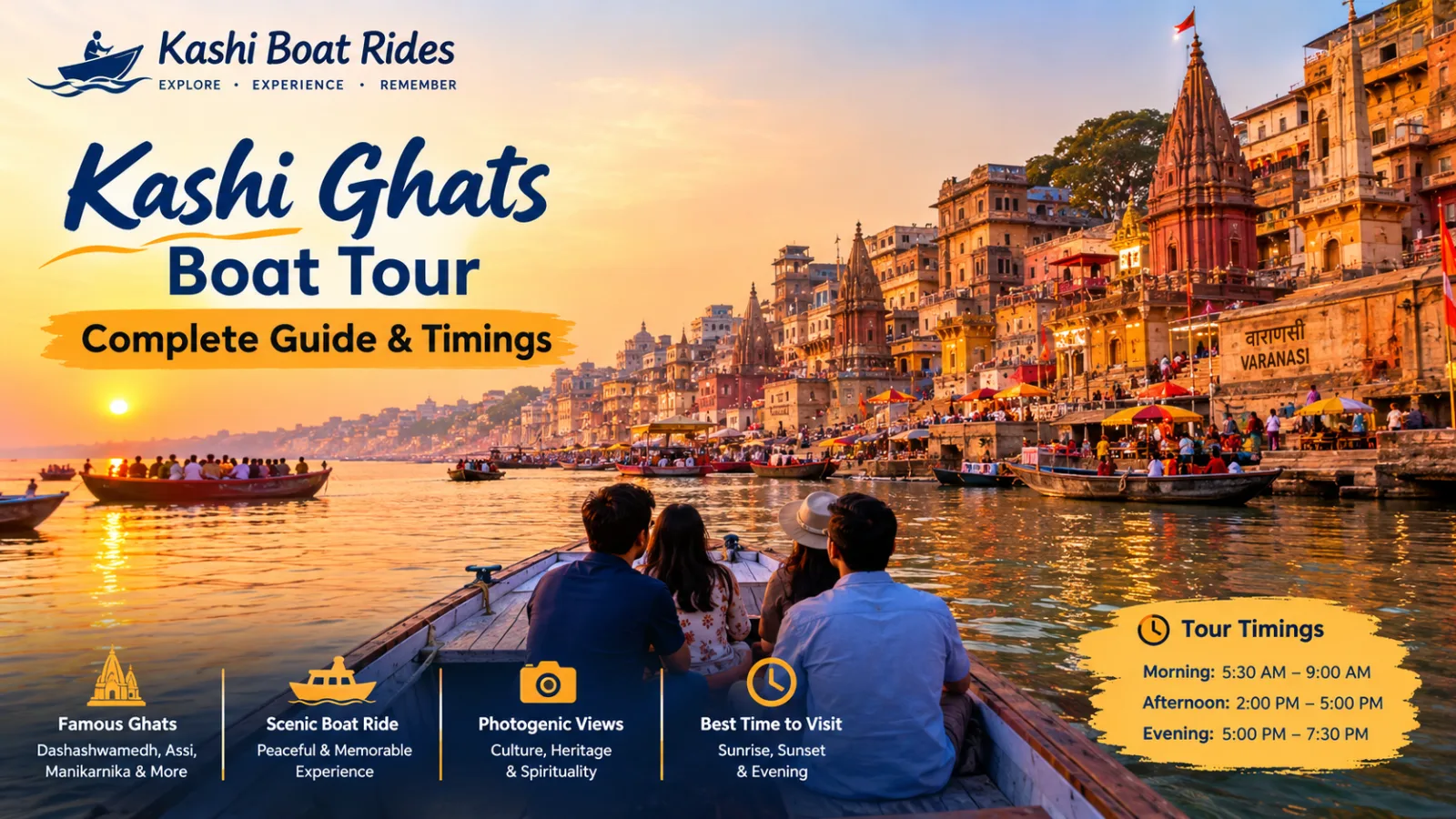
Kashi Boat Rides provides authentic boating experiences across these historic riverfronts. Travelers can book a ride for Rs 1100 per person or choose a private boat for family and friends at Rs 3000 per boat. Each ride lasts about 1 hour. You can choose to board from Assi Ghat, Dashashwamedh Ghat, or Namo Ghat depending on your accommodation and itinerary. Because sunrise, sunset, and Aarti timings change across the winter and summer months, you can check the exact schedule on the booking page or speak directly with the team before reserving.
Practical Tips for Exploring the Varanasi Ghats
- Wear comfortable slip-on footwear: Exploring the ghats requires ascending and descending countless steep stone stairs. Slip-on shoes make visiting waterfront temples along the way simple.
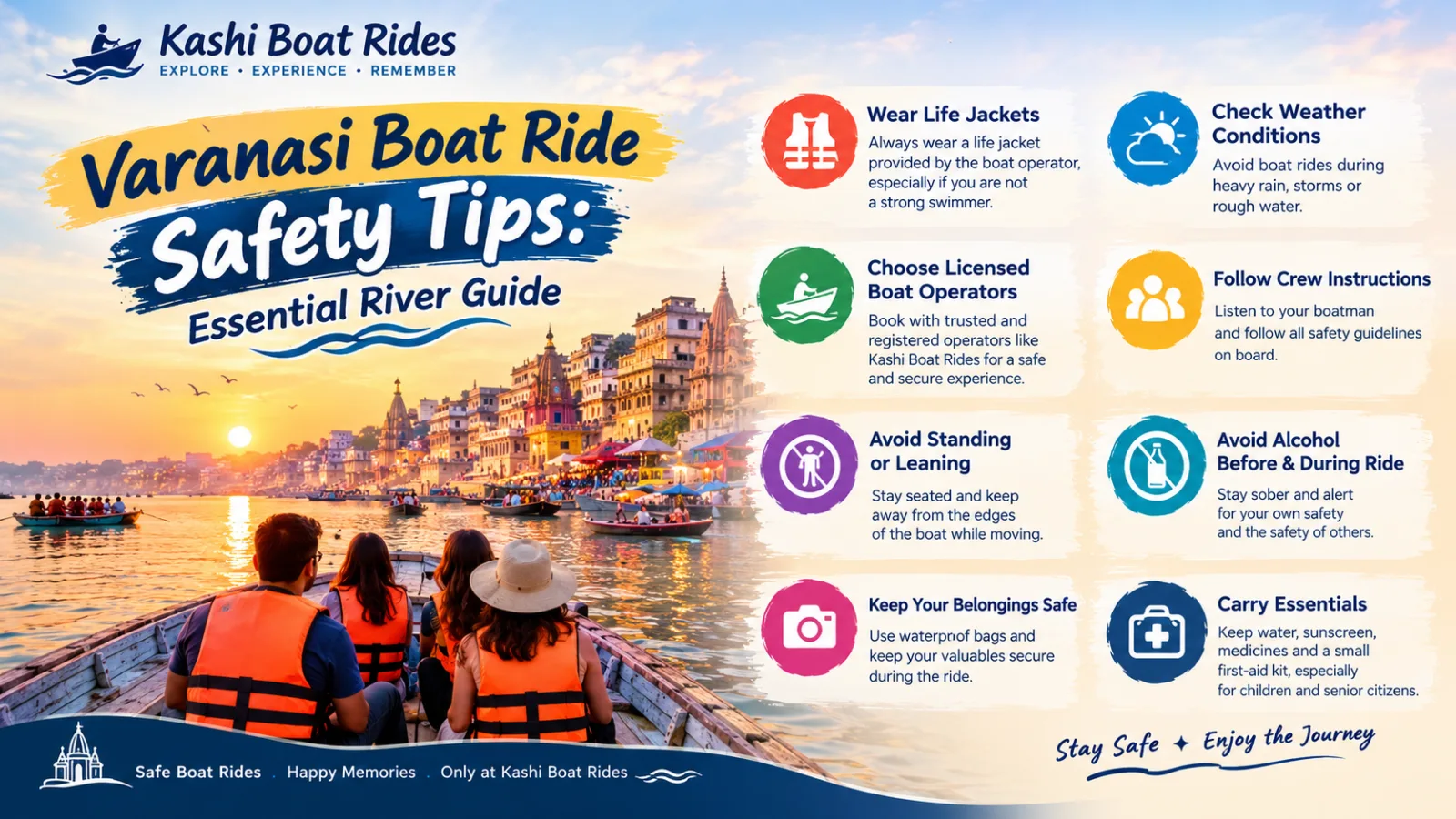
- Respect local customs: Avoid swimming in the immediate vicinity of cremation ghats, and never point cameras or mobile phones at funeral ceremonies at Manikarnika or Harishchandra Ghats.
- Start early: The ghats are at their cleanest, quietest, and coolest during the first hour after dawn, making it the ideal window for walking and photography.
- Pick your boarding point wisely: If staying near the southern university area or Lanka, Assi Ghat is most convenient. If you are near Godowlia or the Kashi Vishwanath temple, Dashashwamedh Ghat is within easy walking distance. If arriving from the railway or northern bypass, Namo Ghat offers the easiest road access.
Ready to see the riverfront from the water? Reserve your trip with Kashi Boat Rides online, or call and message via WhatsApp on +91 9214612531 to book your preferred boarding ghat and departure slot.
Frequently asked questions
Which is the single most famous ghat in Varanasi?
Dashashwamedh Ghat is widely regarded as the most famous ghat in Varanasi. It is centrally located near the Kashi Vishwanath Temple and is celebrated across the world for hosting the magnificent evening Ganga Aarti ceremony every single night.
Can you walk all the way from Assi Ghat to Dashashwamedh Ghat?
Yes, outside of peak monsoon season when the Ganga rises significantly, the stone steps of the ghats connect continuously. You can comfortably walk from Assi Ghat to Dashashwamedh Ghat in approximately 40 to 60 minutes, passing dozens of historic sites along the way.
Where is the best place to watch the evening Ganga Aarti?
The main Aarti takes place at Dashashwamedh Ghat. While you can sit on the steps of the ghat, viewing the ceremony from a stationary boat on the water provides an unobstructed, memorable vantage point without the crush of the onshore crowd.
How much does a boat ride cost across the ghats with Kashi Boat Rides?
Kashi Boat Rides offers shared boat rides at Rs 1100 per person, as well as private boat bookings for families or groups at Rs 3000 per boat. Each ride lasts about 1 hour and covers the primary scenic and cultural ghats.
Where can I board a boat ride along the Varanasi riverfront?
When booking with Kashi Boat Rides, you can choose to board directly from Assi Ghat in the south, Dashashwamedh Ghat in the center, or Namo Ghat in the north, giving you flexible access no matter where your hotel is located.